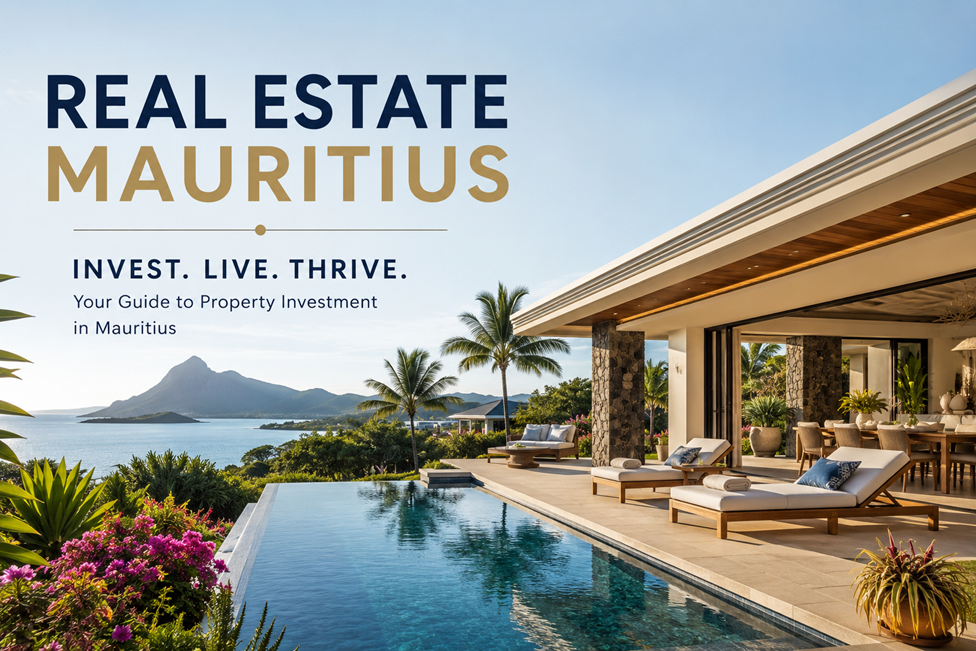
Why Mauritius Real Estate Attracts International Investors
Mauritius combines international demand, limited prime land, lifestyle appeal, political stability and long-term ownership opportunities within one strategically positioned island market.
Real estate is about more than property
International investors increasingly view property as a combination of wealth preservation, lifestyle planning, geographic diversification and long-term optionality.
The most experienced investors rarely purchase an asset solely because a building appears attractive. They consider the legal, financial and strategic role the property may play over many years.
Mauritius is no longer viewed only as a tourism destination. It is increasingly considered an international residential and investment market that combines lifestyle quality with long-term demand.
For entrepreneurs, families and investors, a property may serve several purposes simultaneously: a home, a future relocation option, a rental asset, a family base or part of a wider international portfolio.
- Wealth preservation
- Lifestyle enhancement
- Geographic diversification
- Long-term security
- Future relocation flexibility
- Generational planning
Why global capital is looking beyond traditional markets
Established markets such as London, Paris, New York, Dubai and Singapore remain important, but higher prices, regulation and market maturity have encouraged investors to consider additional locations.
Geographic diversification
Mauritius provides exposure to a market with different economic, lifestyle and demand characteristics from major metropolitan property markets.
Lifestyle demand
International buyers increasingly prefer locations that combine investment potential with genuine personal use and quality of life.
Limited prime land
Mauritius is a finite island. Prime coastal, golf and high-quality residential locations cannot expand indefinitely.
International accessibility
Mauritius connects investors and residents with Africa, Europe, the Middle East and Asia.
Political stability
Long-term property decisions require confidence in institutions, economic continuity and the wider legal environment.
Residential demand
Demand is supported by Mauritian residents, international buyers, entrepreneurs, families, professionals and retirees.
Long-term ownership
Many buyers are motivated by future use and capital preservation rather than rapid speculative resale.
Strategic optionality
An asset may provide rental income, personal use, family access or a future base for relocation.
Would you actually want to live there?
This question has become increasingly important because long-term residential demand often follows genuine lifestyle quality.
The lifestyle-investment trend
Buyers increasingly seek locations that can provide financial value and personal enjoyment at the same time.
Mauritius offers a tropical climate, ocean access, outdoor living and established international communities.
This broadens demand beyond investors who view property only through short-term rental yield or resale appreciation.
Demand-supporting characteristics
International demand comes from several buyer groups
Entrepreneurs
Business owners may combine investment, residence and international business planning.
Families
Families may seek long-term stability, space and a future base in Mauritius.
Retirees
Lifestyle, climate and long-term personal use can influence purchase decisions.
Remote professionals
Internationally mobile professionals increasingly value flexibility and quality of life.
Private investors
Investors may seek diversification, rental demand and long-term capital preservation.
Prime locations cannot be reproduced indefinitely
Finite island geography
Unlike large countries with extensive development land, Mauritius operates within clear geographic limits. This makes planning, infrastructure and location selection especially important.
Limited oceanfront land
Genuine high-quality coastal sites are finite. Not every development described as coastal offers the same position, access or long-term appeal.
Selective premium supply
Luxury developments may be limited by land, approvals, infrastructure and the quality required by international buyers.
Location-specific demand
Scarcity creates value only where buyers continue to want the location, product type and surrounding lifestyle.
Investors need confidence to plan beyond the next market cycle
Property investment is a long-term decision. Legal clarity, institutional continuity and realistic ownership rules often matter more than short-term price movements.
Political continuity
Stable institutions support confidence among buyers making commitments over many years.
Legal framework
Buyers require clear ownership structures, contracts, approvals and transfer procedures.
Economic openness
International business, professional services and investment infrastructure contribute to market confidence.
Property rights
Ownership rights remain meaningful only when eligibility, documentation and permitted use are correctly established.
Professional support
Legal, tax, banking, property-management and technical expertise support more informed transactions.
Long-term perspective
Many international buyers are seeking durable value rather than immediate speculative gains.
Property segments attracting international attention
International buyers often focus on assets that combine location, design, lifestyle, management quality and credible long-term demand.
Oceanfront villas
Premium coastal homes may offer privacy, views, personal use and strong lifestyle appeal.
Golf estate residences
Managed communities may combine leisure facilities, security and established residential environments.
Marina properties
Selected marina developments appeal to buyers interested in boating, waterfront living and integrated services.
Resort-style developments
Branded or managed environments may provide amenities, property services and rental-management options.
Family residences
Practical homes near schools, services and employment areas may benefit from sustained residential demand.
Rental properties
Rental performance depends on location, permitted use, operating costs, management and tenant demand.
Retirement property
Accessibility, healthcare, community, maintenance and daily convenience become central considerations.
Mixed-use locations
Areas combining homes, business, retail, healthcare and leisure can support practical long-term use.
Property can provide geographic and strategic diversification
Beyond equities and bonds
Investors often diversify across shares, bonds, private businesses and real estate.
Geographic diversification adds another dimension because markets do not always move in the same way or respond to identical economic conditions.
Mauritius may therefore complement assets held in Europe, North America, Africa, Asia or the Middle East.
Potential strategic roles
Business owners often combine property with wider life planning
Entrepreneurs may view a Mauritius property as an investment, residence option, family base and component of a wider business strategy.
Lifestyle
Ownership can provide a personal base within an attractive international environment.
Flexibility
A property can create additional options for future residence, extended stays or family use.
Security
Tangible ownership may form part of a broader long-term asset strategy.
Business integration
Property, company formation and residence planning should be assessed together where the objectives overlap.
Family continuity
A Mauritius base may support future plans involving children or multiple generations.
International mobility
Property can contribute to flexibility, but it does not automatically create immigration rights.
Property ownership does not automatically create residence rights or investment success
Non-citizen ownership, approved property schemes, residence eligibility, rental use, taxation, financing and resale rules must be verified for the specific asset and buyer. Marketing language should never replace legal, technical, financial and location-specific due diligence.
What investors should examine before buying
- Ownership eligibility confirmed
- Approved acquisition route verified
- Developer and seller checked
- Title and property rights reviewed
- Planning approvals confirmed
- Construction quality assessed
- Location visited personally
- Infrastructure and access examined
- Maintenance costs calculated
- Management charges reviewed
- Rental restrictions confirmed
- Realistic rental demand analysed
- Financing conditions understood
- Currency exposure considered
- Tax consequences reviewed
- Residence assumptions verified
- Resale market assessed
- Exit costs calculated
Demand for stable lifestyle destinations may continue to grow
International property trends increasingly reflect priorities such as quality of life, political stability, mobility and long-term wealth preservation.
Mauritius aligns naturally with several of these priorities. Its future appeal, however, will not be distributed equally across every property and every location.
High-quality assets in credible locations with appropriate management, infrastructure and buyer demand are more likely to remain resilient than properties purchased mainly because of promotional promises.
The strongest investment case therefore combines island-level appeal with disciplined asset selection.
Mauritius real estate investment
Why does Mauritius attract international property investors?
Mauritius combines lifestyle demand, limited prime land, international accessibility, political stability and several property segments designed for international buyers.
Is Mauritius real estate suitable only for luxury buyers?
No. The market includes luxury villas, managed residences, family homes, rental properties and other assets. Eligibility for non-citizens depends on the applicable rules.
Can foreigners buy property anywhere in Mauritius?
No general assumption should be made. Non-citizen property acquisition is subject to specific legal routes, approvals and eligibility conditions.
Does buying property automatically provide residency?
No. Residence eligibility depends on the applicable property scheme, purchase conditions, current law and the buyer’s individual circumstances.
Is oceanfront property always the best investment?
Not necessarily. Access, erosion exposure, maintenance, location, privacy, construction quality and resale demand must also be assessed.
Can Mauritius property generate rental income?
Potentially, but rental use, demand, seasonality, management fees, maintenance, taxation and legal restrictions should be verified.
Are luxury developments automatically good investments?
No. A premium price does not guarantee strong demand, construction quality, rental performance or resale liquidity.
What makes scarcity valuable?
Scarcity can support value when the location remains desirable and supply cannot easily be expanded. Scarcity alone does not guarantee appreciation.
Should property and company formation be planned together?
They should be coordinated where business, residence, financing or ownership objectives overlap. A company is not automatically the most suitable property owner.
What is the biggest mistake international buyers make?
A common mistake is buying on the basis of lifestyle imagery or headline returns without verifying legal eligibility, total costs, location, management and exit demand.
Invest in the strategy, not only in the building
Mauritius1331 helps international entrepreneurs, families and investors connect property decisions with residence, business, taxation, lifestyle and long-term planning.
Property decisions should support the wider Mauritius strategy
This page forms part of the Mauritius1331 Business Real Estate content area. Only confirmed published destinations are linked here.