Movement
Walking, swimming, sport and outdoor activity can become part of daily life.
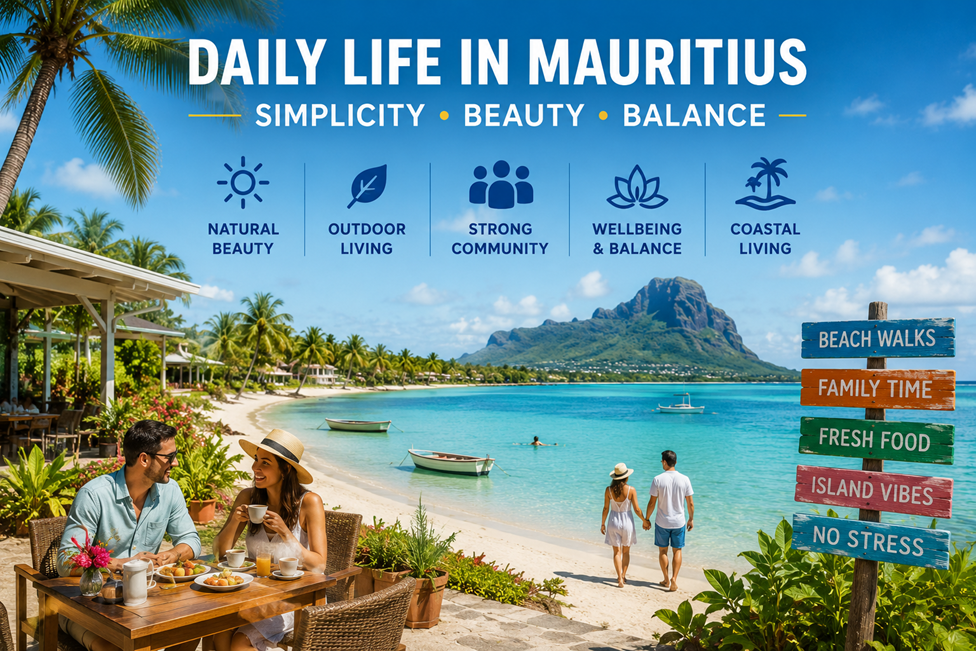
Mauritius does not create wellbeing automatically. It creates an environment in which movement, nature, relationships and recovery can become easier to include in ordinary life.
For residents who actively use these opportunities, the island can support a healthier relationship with work, time, community and personal priorities.
Professional success and financial stability remain important, but many people no longer consider them sufficient measures of a good life.
They are also evaluating whether a location supports physical health, emotional stability, family relationships, social connection and enough time to enjoy the results of their work.
Mauritius aligns with this change because nature, outdoor activity, coastal living and community are not limited to short holidays. Depending on location and routine, they can become part of ordinary weekdays.
The island's greatest lifestyle value therefore lies not in perfection, but in the possibility of creating healthier everyday patterns.
Walking, swimming, sport and outdoor activity can become part of daily life.
Nature and coastal environments can provide regular mental distance from work.
Family, community and social relationships support emotional security.
Work, personal life and wellbeing can be organised more intentionally.
Physical activity without recovery can become another obligation. Free time without community can become loneliness. A balanced lifestyle depends on the interaction of health, relationships, purpose and routine.
People often treat health as a matter of discipline alone.
In reality, the place where someone lives can either support healthy behaviour or make it unnecessarily difficult.
When a walk, swim or outdoor meal is easily accessible, wellbeing does not always require extensive planning. When family, work and recreation are located within a realistic radius, more time remains available for recovery.
Mauritius can offer these advantages, but location remains critical. A poor choice of home, school or workplace can replace one form of stress with another.
A spectacular coastal property loses much of its lifestyle value when work, school, healthcare and essential services require exhausting daily journeys.
One of the most practical lifestyle advantages of Mauritius is the number of ways residents can move outside formal gyms and structured training plans.
Heat, humidity, sun exposure, dehydration and seasonal weather should influence when and how outdoor activity is planned.
Mental wellbeing is not only influenced by major life events. It is also shaped by the number of small opportunities people have to pause and recover.
A short walk, time near the sea, a view across the mountains or a quiet moment outdoors can interrupt a cycle of constant work and digital stimulation.
Mauritius makes these experiences visible and accessible in many regions. The natural environment can become part of the weekly rhythm rather than something reserved for annual leave.
Nature does not replace professional mental healthcare, but it can form part of a broader routine that supports reflection, calmness and perspective.
Open coastal views can create a stronger feeling of physical and mental room.
Beach walks and time near the water can become regular habits rather than special occasions.
The coast encourages walking, swimming and other forms of outdoor activity.
Families and friends often use coastal spaces for shared time and conversation.
Distance from screens and enclosed spaces can help everyday problems feel more manageable.
Simple contact with the sea can make ordinary life feel more valuable and intentional.
Salt air, humidity, maintenance, weather exposure and distance from inland services should be included in any realistic decision about where to live.
Modern work can follow residents anywhere through laptops, phones, international clients and different time zones.
The island can provide better conditions, but residents must still protect time, create boundaries and make choices that support the life they intended to build.
People can live in beautiful surroundings and still feel lonely.
Social wellbeing depends on trusted relationships, regular interaction and a sense of being recognised within a community.
Mauritius offers many opportunities for connection through schools, work, sport, culture and neighbourhood life. International networks can make the first stage of relocation easier.
Long-term belonging becomes stronger when residents also participate in Mauritian life rather than remaining exclusively within expatriate circles.
Strong relationships provide practical help, emotional support and perspective before stress develops into isolation or crisis.
Swimming, walking and outdoor recreation allow families to be active together.
Nature and outdoor time can replace some screen-based or highly organised entertainment.
Meals, coastal walks and weekend activities can create stable routines.
Children experience different traditions, languages and perspectives.
Schools, neighbours and other families can help replace support networks left abroad.
School, work, healthcare and transport must be aligned for family balance to be sustainable.
One person's dream of balance can create stress for another when education, purpose, friendships or professional opportunities are ignored.
Modern life frequently produces pressure through constant comparison, consumption, information and overcommitment.
Mauritius can encourage a more direct relationship with time. Outdoor experiences, local community, shared meals and nature do not always require complex preparation or large amounts of consumption.
This does not make life on the island simple in every respect. Administration, imported goods, property maintenance, traffic and international travel can still create complexity.
The opportunity lies in deciding which forms of complexity genuinely improve life and which can be removed.
Routine care, emergencies, specialist treatment and insurance require individual planning.
Heat and humidity can be energising for some residents and physically demanding for others.
Administration, housing, schooling and unfamiliar routines can initially increase stress.
Distance from established family and friendships can affect emotional health.
An unrealistic budget can undermine the wellbeing a relocation was intended to create.
Residents must actively use the opportunities for movement, connection and recovery.
Medical conditions, mental-health concerns and individual support needs should be discussed with qualified professionals rather than addressed through relocation alone.
Balance work, schools, healthcare, traffic, recreation and community before selecting a property.
Create clear boundaries around evenings, weekends and personal recovery.
Use walking, swimming or outdoor activity as part of ordinary routines.
Join activities, networks and local environments before isolation develops.
Understand insurance, routine providers, emergency access and specialist needs.
Experience normal weekdays in Mauritius before making permanent decisions.
No. Mauritius provides opportunities for outdoor movement, nature and balance, but residents must actively build healthy routines.
Outdoor living can encourage movement, time away from screens, social contact and more regular mental recovery.
No. Inland and central regions may provide better access to work, schools, healthcare or a cooler climate.
It can create supportive conditions, but working hours, commuting, time zones and professional boundaries remain important.
Nature may support relaxation and recovery, but it does not replace qualified mental-health care when professional support is needed.
It can offer outdoor activities and shared experiences, but healthcare, schools, transport, safety and household needs must be evaluated carefully.
Yes. Administration, housing, finances, schools and social adjustment can make the first months demanding.
Yes. A longer stay during normal working weeks provides a more realistic impression than a resort holiday.
Mauritius can support healthier, happier and more balanced living because nature, movement, community and recovery can become part of ordinary routines.
Its value lies not in promising a life without stress, illness or responsibility. It lies in offering residents more opportunities to organise work, relationships and personal wellbeing around a more sustainable daily rhythm.
Wellbeing is not a destination people reach once. It is the result of small decisions repeated in an environment that helps those decisions become easier.
This article provides general lifestyle information and does not constitute medical, psychological or healthcare advice. Health outcomes, healthcare access, insurance, climate tolerance, living conditions and personal experiences vary. Individual medical or mental-health concerns should be discussed with appropriately qualified professionals.