01
Simplicity
Life can feel more manageable when recreation, nature, social contact and everyday services remain within a relatively compact island environment.
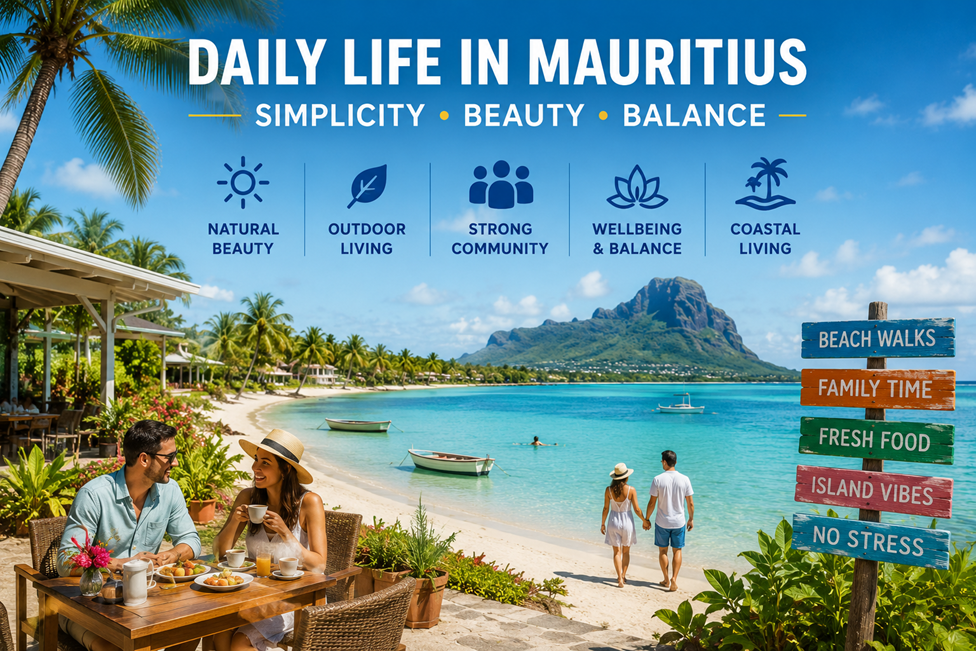
The real attraction of Mauritius is not found only in spectacular beaches, luxury resorts or once-in-a-lifetime experiences. It is found in the rhythm of ordinary days.
Morning light, outdoor meals, cultural variety, personal connections and the constant presence of nature can turn everyday routines into a more rewarding way of living.
People often imagine happiness through major achievements, expensive purchases or dramatic life changes. In reality, long-term satisfaction is usually shaped by routines.
How long does the daily commute take? Is there time for family? Can people spend time outdoors? Does the environment create energy or exhaustion? Do ordinary days feel rushed, repetitive and disconnected—or balanced and meaningful?
Mauritius attracts people because its environment can improve the quality of these small daily experiences. The island does not remove responsibility, but it can change the atmosphere in which work, family and personal life take place.
These qualities are not separate lifestyle promises. Together, they influence how people experience time, relationships, work and personal wellbeing.
Life can feel more manageable when recreation, nature, social contact and everyday services remain within a relatively compact island environment.
Tropical vegetation, mountains, lagoons, sunlight and coastal landscapes are not occasional attractions. They form part of the normal surroundings.
Residents can combine professional ambition with family, recreation, community and greater attention to health and personal fulfilment.
A beautiful environment alone does not create a good life. Simplicity without opportunity may feel limiting. Balance without community may feel empty. Mauritius attracts people because these qualities can coexist.
Simplicity does not mean that life in Mauritius is primitive, effortless or free from administration.
It means that people may feel less pressure to organise every enjoyable experience. A walk near the sea, a meal outdoors or a spontaneous visit with friends can happen without becoming a major event.
The island's smaller scale can also make life feel more understandable. People often become familiar with neighbourhoods, local businesses, service providers and community routines more quickly than they would in a very large city.
This can create a stronger sense of control over daily life, even when work and family responsibilities remain demanding.
Mauritius changes the relationship between daily routine and the natural environment.
In many countries, beaches, tropical vegetation and mountain landscapes are experienced only during holidays. In Mauritius, they can form the backdrop to shopping, working, school runs, exercise and family life.
Bright tropical mornings can create an immediate sense of energy and encourage earlier outdoor activity.
The sea influences views, recreation, social life, housing decisions and the emotional rhythm of many communities.
Sugarcane fields, tropical gardens, mountain ridges and forested areas create visual variety across the island.
Many residents can eat, meet friends or relax outside during much of the year.
Tropical rain, cloud formations and intense colours give the landscape a dynamic rather than static character.
A sunset, a sea breeze or a mountain view can become part of an otherwise ordinary working day.
The value is not merely seeing something spectacular once. It is experiencing pleasant surroundings often enough that they influence the emotional quality of daily life.
Daily routines vary widely by profession, family situation and location. Yet many residents experience a closer relationship between work, outdoor life and personal time.
Early light, warm temperatures and nearby outdoor spaces can encourage walking, exercise or breakfast outside before work begins.
Residents still manage meetings, deadlines, schools, traffic, administration and business responsibilities.
The beach, sport, shopping, family time or social contact may be relatively easy to combine with the end of the working day.
Outdoor meals, warm evenings and informal gatherings can create a natural separation between work and personal time.
The climate and environment encourage residents to move more naturally between indoor and outdoor spaces.
People may walk along the coast, eat outside, swim, exercise, meet friends in open-air settings or spend time in gardens and terraces.
This does not mean that every day is sunny or that tropical heat suits everyone. Humidity, heavy rain and cyclone season are real parts of island life.
Even so, the overall accessibility of outdoor experiences can positively influence physical activity, social interaction and emotional wellbeing.
Healthy routines often fail when they require too much planning. In Mauritius, movement and time outdoors can become natural extensions of everyday life.
Living near water can affect the pace, atmosphere and emotional texture of a day.
Coastal views create a sense of distance and visual freedom that dense urban environments often cannot provide.
Walking by the sea or watching the horizon can create moments of reflection without requiring a formal wellness routine.
Swimming, sailing, paddleboarding, fishing and beach activities can become regular rather than exceptional experiences.
Beaches, promenades and coastal cafés provide informal places for families, friends and communities to meet.
Tides, wind, waves and weather create a stronger awareness of the natural rhythm of the island.
Not every resident lives directly by the beach, and different coasts offer very different climates, communities and lifestyles.
Mauritius is a relatively small society in which personal relationships, recommendations and local networks often play an important role.
Newcomers may initially notice that communication and social interaction can feel more personal than in highly anonymous cities. Building trust, however, still takes time and genuine participation.
Mauritius can feel welcoming, but lasting connection grows through participation. People who engage respectfully with local life often experience the island much more deeply.
Mauritius brings together Indian, African, European, Chinese and island influences within one relatively small society.
English, French, Mauritian Creole and additional community languages shape business, education and everyday communication.
Street food, home cooking and restaurants reflect the island's diverse historical and cultural influences.
Religious and cultural celebrations give the year a distinctive rhythm and create visible expressions of different traditions.
Different towns, villages and regions have their own social atmosphere, history and local identity.
International professionalism often coexists with personal relationships and local ways of building trust.
Distinct communities maintain their traditions while participating in a broader Mauritian national identity.
Family remains an important part of Mauritian culture, and many international residents are attracted by the possibility of creating more shared experiences.
Food and hospitality create regular opportunities for conversation, connection and multi-generational family life.
Beaches, nature, sports and excursions can make family recreation easier to integrate into weekends and holidays.
Children may grow up around several languages, traditions and cultural perspectives.
Where commuting and work patterns allow, families may gain more time for daily routines together.
Schools, neighbours, activities and local networks can become important parts of family life.
Education, transport, housing, healthcare and residence status must still be considered realistically before relocation.
Mauritius attracts entrepreneurs, professionals and remote workers who want professional achievement to coexist with a more complete life.
The island does not automatically provide balance. A demanding company, poorly chosen location or unrealistic schedule can create stress anywhere.
What Mauritius offers is a supportive environment: outdoor activities, smaller distances, coastal living and a social culture that does not define every person exclusively through work.
For many residents, the result is not less ambition but a more sustainable relationship with ambition.
People must choose where to live, how to organise work, what commitments to accept and how much time to protect. The environment helps, but it cannot make those decisions on their behalf.
Long-term happiness is rarely created by constant excitement. It grows through small experiences that are repeated often.
A simple morning routine can feel different when it takes place in warm air, green surroundings or near the coast.
Moving outdoors can create a natural break between professional pressure and personal time.
Food provides an accessible way to maintain family relationships and discover the island's cultural diversity.
Some of the island's most memorable moments require no reservation, ticket or complex preparation.
Repeated contact with neighbours, shopkeepers and local businesses can create a stronger sense of place.
The ability to enjoy a quiet hour without feeling that it must be productive can become one of the island's greatest luxuries.
Daily life in Mauritius includes inconvenience, cost, traffic, administration and weather just as life does elsewhere.
People who understand both the pleasures and practical limitations of Mauritius are more likely to build a stable, satisfying life than those who arrive expecting a permanent holiday.
Founders may value international business opportunities combined with a more human-scale daily environment.
Location-independent workers may appreciate connectivity, outdoor living and the ability to organise work more flexibly.
Parents may seek more shared time, international exposure and access to nature.
Retirees may value climate, community, coastal living and opportunities for an active daily routine.
Investors may combine financial objectives with a future residence or lifestyle strategy.
Some people are not escaping their previous life. They are intentionally designing the next one.
It varies by location, work and family situation. Residents still manage ordinary responsibilities, but nature, outdoor activity, cultural variety and coastal living can become more integrated into their routines.
No. Work, traffic, administration and family obligations can still be stressful. The island provides a supportive environment for balance, but residents must still organise their lives carefully.
No. Many communities are inland, and the distance to the coast varies. The island is compact, but location strongly influences daily routines.
Costs depend on housing, location, schooling, transport and lifestyle. Local products and services may be affordable, while imported goods, premium housing and international services can be expensive.
It can be suitable for remote professionals, provided that connectivity, time zones, residence status, taxation and workspace requirements are planned correctly.
Mauritius can offer families outdoor living, community and international exposure, but education, transport, healthcare and housing require careful evaluation.
It may suit retirees seeking climate, outdoor activity and community, provided that residence, healthcare, insurance and financial requirements are properly planned.
Yes. A longer stay in a residential area provides a much more realistic impression than a short hotel holiday.
The island's appeal does not depend only on dramatic landscapes or major life moments. It grows through daily routines that include more light, nature, connection, movement and personal space.
Mauritius does not offer a perfect life. It offers the possibility of a more balanced one—provided that the location, finances, work, residence strategy and expectations are aligned with reality.
The best lives are not necessarily the busiest, most expensive or most visible. They are the lives in which ordinary days support health, purpose, relationships and genuine enjoyment.
This article provides general lifestyle information. Individual experiences, costs, living conditions, healthcare access and residence requirements vary by location and personal circumstances and should be evaluated independently before relocation decisions are made.