Seven Coloured Earth Mauritius
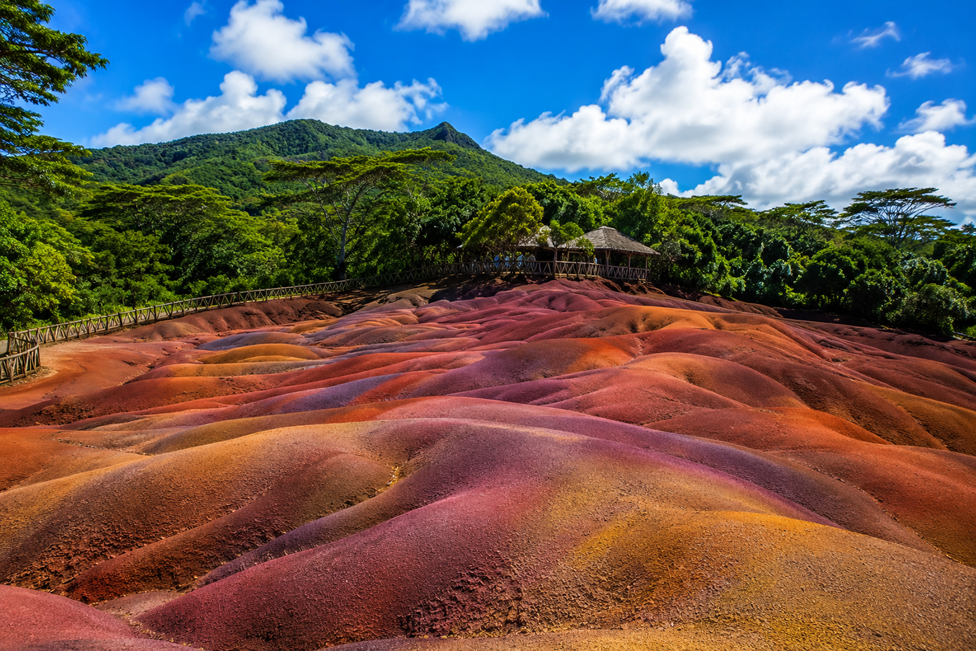
Rolling dunes of red, brown, violet, ochre and blue-grey soil reveal one of Mauritius' most recognisable geological landscapes in the green highlands of Chamarel.
- Located in the Chamarel region of south-west Mauritius
- Formed from weathered volcanic material
- Colours appear different as light and moisture change
- The fragile dunes are viewed from designated platforms
- Chamarel Waterfall is located nearby
A landscape shaped by time
The colours of Chamarel developed through volcanic geology and tropical weathering
Mauritius was created by volcanic activity. Over immense periods, exposed volcanic rock broke down under warm, wet tropical conditions.
Minerals within the weathered material reacted differently with water, oxygen and heat, producing the colour variations visible across the undulating landscape.
The result is not a painted surface or an artificial attraction. It is a naturally formed geological site whose appearance changes with cloud, sunlight, rainfall and viewing angle.
Natural colours
Why different shades appear across the dunes
The landscape includes a spectrum of warm and cool tones rather than seven perfectly separated bands.
Iron-rich tones
Oxidised iron compounds contribute to many of the red, orange, brown and ochre shades.
Cooler mineral shades
Other mineral combinations contribute to violet, grey and subtle blue-toned areas.
Changing light
Morning sun, cloud cover and wet soil can strengthen or soften the visible contrast between colours.
Geological formation
From volcanic rock to coloured earth
Processes that shaped the site
- Ancient volcanic eruptions created the original rock
- Tropical rainfall penetrated and weakened exposed material
- Heat and moisture accelerated chemical weathering
- Minerals oxidised and changed over time
- Erosion gradually formed the rounded surface
Why the landscape remains visible
- The soil surface supports very limited vegetation
- The slopes reveal colour contrasts clearly
- Protected access reduces physical disturbance
- Viewing platforms keep visitors above the dunes
- Site management limits erosion caused by foot traffic
The visitor experience
What to expect during a visit
Observation platforms
Raised viewpoints provide different perspectives across the dunes without damaging the protected surface.
Interpretive displays
Visitor information introduces the geological processes and wider natural landscape of Chamarel.
Giant tortoises
A managed tortoise area adds an additional wildlife element to the visit, especially for families.
Best viewing conditions
Four factors that influence the appearance of the colours
The landscape never looks exactly the same because the visible tones respond to natural conditions.
Sun angle
Lower light can create deeper shadows and stronger surface texture.
Cloud cover
Soft light may reveal subtle colours without strong glare.
Moisture
Recent rain can deepen some tones and change surface contrast.
Viewing angle
Different platforms reveal different combinations of colour and shape.
The name should not be understood too literally
Visitors sometimes expect seven sharply separated stripes, each with one clearly identifiable colour.
In reality, the site presents a natural spectrum of overlapping earthy shades that change continuously across the surface.
The beauty lies in the gradual transitions, curved dunes and the way mineral colours interact with the surrounding green landscape.
Nearby attractions
Combine the coloured earth with the landscapes of Chamarel
Chamarel Waterfall
One of Mauritius' most dramatic waterfalls plunges through a deep volcanic gorge surrounded by tropical vegetation.
Ebony Forest Reserve
Native forest restoration, endemic birds and panoramic viewpoints create a deeper conservation experience.
Black River Gorges
The nearby national park offers hiking, viewpoints, waterfalls and some of Mauritius' most important native forest.
Responsible visiting
Protecting a fragile geological surface
Recommended behaviour
- Remain on designated paths and platforms
- Follow current site instructions
- Supervise children near barriers
- Photograph without leaning into protected areas
- Carry all litter away
What visitors should avoid
- Walking onto the coloured dunes
- Collecting soil or stones
- Crossing barriers for photographs
- Touching or feeding tortoises without permission
- Damaging vegetation around the site
Frequently asked questions
Seven Coloured Earth Mauritius
Where is the Seven Coloured Earth?
The attraction is located in Chamarel in the south-western highlands of Mauritius.
Is the coloured earth natural?
Yes. The colours developed through the weathering and mineral transformation of volcanic material.
Are there exactly seven separate colours?
The name describes a visible spectrum of several tones. The colours blend naturally rather than forming seven perfect stripes.
Can visitors walk on the dunes?
No. The surface is protected and should only be viewed from designated paths and observation platforms.
When is the best time to visit?
Morning often provides cooler temperatures and attractive light, although colour intensity depends on cloud, moisture and sun angle.
How long should visitors allow?
Many visitors spend between approximately 45 minutes and 90 minutes, depending on photography, interpretation and the tortoise area.
Can the visit be combined with Chamarel Waterfall?
Yes. Chamarel Waterfall and the Seven Coloured Earth are commonly visited during the same excursion.
Discover the volcanic landscapes of Mauritius
Explore waterfalls, forests, endemic wildlife, island life and practical information in our comprehensive English Mauritius guide.